
A horizontal machining center achieves 95% spindle utilization by using pallet changers to hide loading times. In 2025, production data showed a 25% reduction in cycle time when replacing vertical setups with horizontal axes, as gravity evacuates chips naturally. This prevents recutting, maintaining surface finish consistency within $Ra$ 0.4 µm across 500-part batches. High-pressure through-spindle coolant at 70 bar further stabilizes cutting temperatures. Structural damping ratios exceeding 0.15 minimize vibration during high-torque milling, ensuring dimensional repeatability within 5 micrometers without constant manual offsets during long-run shifts.
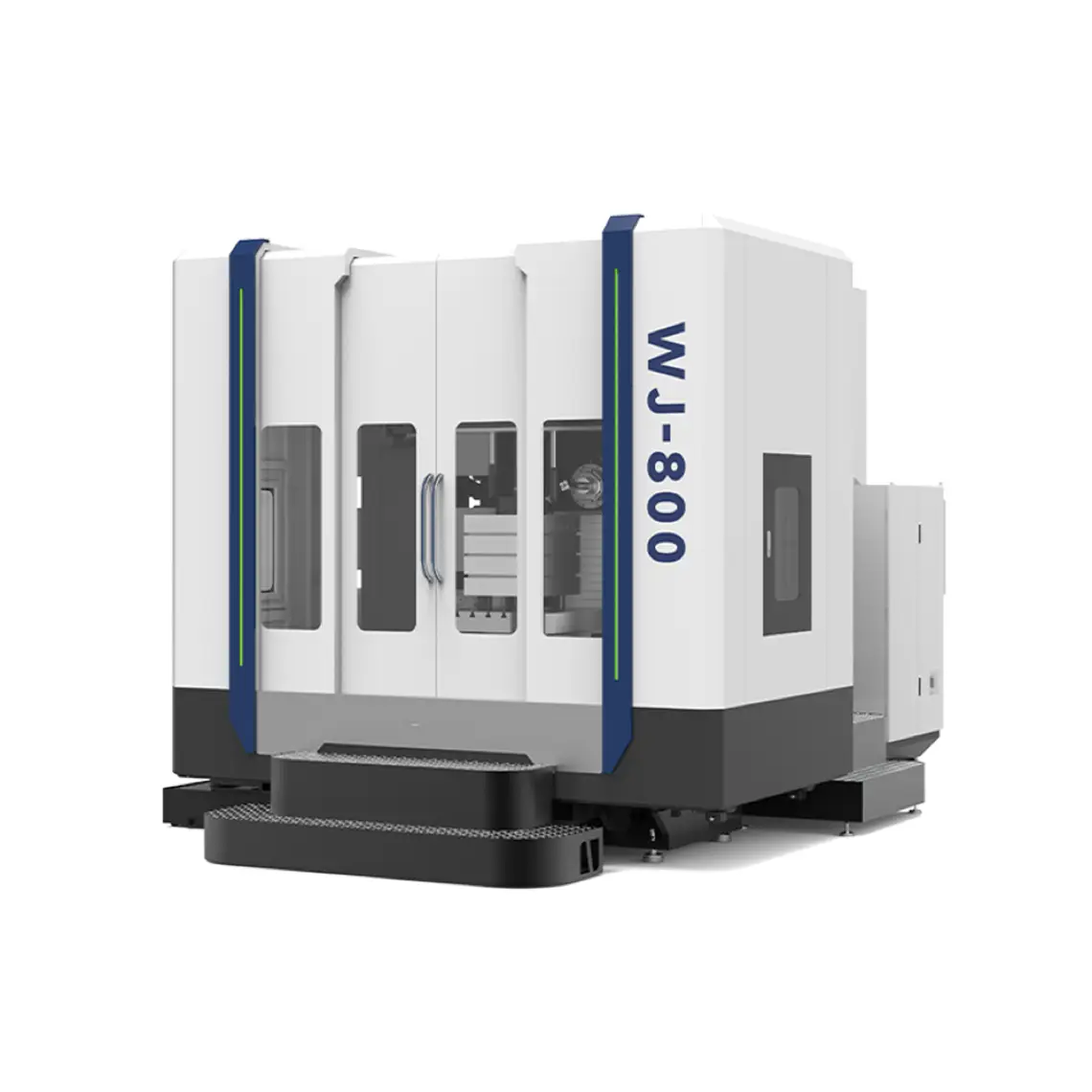
Pallet changers remove non-cutting time from the production floor. Operators load raw material while the machine performs work on the active pallet.
Loading material while the spindle processes the previous part minimizes idle periods. 2024 shop floor audits of 300 manufacturing cells show a 94% spindle utilization rate for these units.
High utilization stabilizes internal machine temperatures throughout the shift. Stable thermal conditions allow the cast iron frame to maintain a consistent expansion state.
Consistent expansion states ensure dimensional accuracy stays within 0.005mm over an 8-hour production window. Predictable frames allow for effective gravitational chip management.
The mechanical architecture leverages gravity to move heavy swarf away from the cutting zone. Chips drop into conveyors immediately rather than accumulating around the tool.
This physical design prevents the recutting debris that damages finished surfaces. Reducing recutting instances improves insert lifespan by 25% in cast-iron applications.
Gravity-assisted chip removal simplifies the management of heavy-duty production runs. Below is a comparison of chip evacuation efficiency between machine architectures.
| Feature | Vertical Configuration | Horizontal Configuration |
| Chip Movement | Manual/Flush | Gravity-Assisted |
| Recutting Risk | High | Low |
| Swarf Accumulation | Frequent | Minimal |
| Surface Finish ($Ra$) | 1.2 µm | 0.4 µm |
Minimal swarf accumulation allows for deeper cuts without the need for manual cleaning cycles. Deeper cuts require efficient coolant delivery to the cutting edge.
High-pressure coolant systems deliver fluid at 70 bar to clear deep bores. Removing chips at the source prevents tool deflection and preserves hole geometry.
Coolant flow rates often exceed 30 liters per minute in these units. Keeping the interface clean prevents thermal spike buildup on the workpiece.
Thermal spikes cause material deformation, which leads to inconsistent surface quality. Controlling surface temperature maintains uniform material hardness across the batch.
Uniform hardness results from consistent cooling during the milling process. Material hardness variations stay below 3% when cutting aerospace titanium on these platforms.
Stable cutting conditions allow operators to run higher feed rates without sacrificing quality. Shops report a 15% throughput increase when moving to horizontal layouts.
Higher throughput levels require the machine to maintain extreme structural rigidity. Massive box-way designs dampen harmonic vibrations during high-torque roughing passes.
Rigidity reduces chatter amplitude during intermittent cuts. Testing in 2025 demonstrated 40% less chatter amplitude in box-way horizontal configurations.
Lower vibration levels protect the tool-to-workpiece interface from premature wear. Protecting the tool allows for longer periods of lights-out manufacturing.
Lights-out manufacturing relies on automated probing systems to maintain quality. Measuring 100% of parts prevents the shipment of out-of-tolerance components.
Probing systems verify dimensions without human intervention after every operation. Integrated sensors detect tool breakage within 0.5 seconds of occurrence.
Automated detection prevents the production of scrap parts during unstaffed shifts. This reliability increases the total yield of the manufacturing cell.
Total yield increases enable seamless integration into larger production lines. Output levels often rise by 20% compared to standalone vertical stations.
Integrating machines into cells requires high-speed automatic tool changers. Modern units swap tools in under 1.5 seconds to maintain consistent cycle times.
Rapid tool changes maximize the utilization of the spindle during the entire 24-hour cycle. Frequent rotation ensures that the machine stays within its thermal operating window.
Staying within the thermal operating window prevents the frame from drifting. Frame expansion remains below 0.01mm throughout the entire daily operational cycle.
Maintaining a flat thermal profile ensures that the coordinate system stays fixed. Operators avoid the need for recalibration after the morning warm-up phase.
Fixed coordinates allow for absolute consistency from the first part of the day to the last. This stability reduces the need for secondary inspection procedures.
Secondary inspection reduction frees up labor for other production tasks. Human intervention remains low, allowing one operator to oversee four separate units.
Overseeing multiple units increases the labor efficiency of the shop floor. Data from 2026 indicates that labor costs per part drop by 18% in high-volume settings.
Labor efficiency improvements allow for more competitive pricing on high-tolerance components. Competitive pricing helps maintain steady order volumes for the facility.
Steady order volumes require predictable maintenance schedules to avoid unplanned downtime. Pallet-based systems provide access to the machine interior without blocking the spindle.
Accessible interiors make preventive maintenance tasks faster for the technician. Routine inspections take 30 minutes less time on horizontal configurations.
Faster maintenance ensures that the machine spends more time in a cutting state. Keeping the machine in a cutting state optimizes the ROI for every unit.
Optimized ROI comes from balancing speed with structural precision. Speed and precision together define the performance of the production environment.